


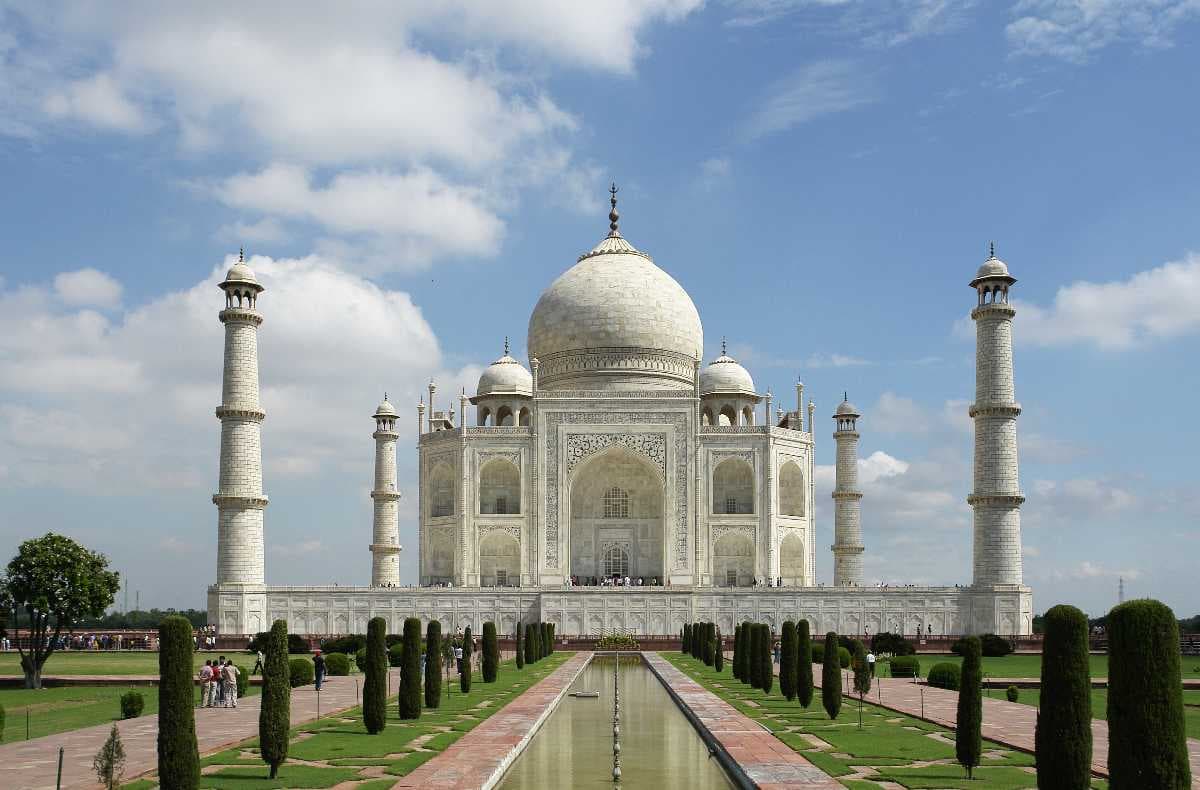


Agra's crown jewel, the Taj Mahal, isn't just a monument; it's a love poem etched in marble. A UNESCO World Heritage Site and one of the New Seven Wonders of the World, the Taj Mahal stuns visitors with its ethereal beauty and rich history.
A Monument to Love:
- A Mughal Marvel: Built by Mughal emperor Shah Jahan in memory of his third wife Mumtaz Mahal, the Taj Mahal is a breathtaking example of Mughal architecture. The white marble facade, adorned with intricate floral patterns and semi-precious stones, takes on a mesmerizing glow in different light conditions.
- Symmetry and Grandeur: The design is a masterpiece of symmetry, with perfectly proportioned buildings reflecting in the still waters of the reflecting pool. The central mausoleum, with its towering dome and four minarets, dominates the complex.
- Intricate Details: A closer look reveals the true artistry of the Taj. Delicate inlay work featuring flowers, calligraphy, and geometric designs adorns the walls, creating a mesmerizing tapestry of color and texture.
Exploring the Grounds:
- Char Bagh Gardens: Walk through the formal Char Bagh gardens, a Mughal-style paradise divided into quadrants by water channels. Lined with cypress trees and flowering plants, these gardens add a touch of serenity to the complex.
- Yamuna Riverside: Take a moment to admire the Taj Mahal's reflection in the Yamuna River, especially at sunrise or sunset when the colors are at their most vibrant.
- Agra Fort and Other Gems: While the Taj Mahal is the main attraction, Agra offers more. Explore the imposing Agra Fort, a Mughal stronghold, or visit nearby tombs and mosques for a deeper understanding of Mughal history and architecture.
Planning Your Visit:
- Best Time to Visit: The Taj Mahal is beautiful year-round, but the best time to visit is during the cooler months (October to March) to avoid the scorching summer heat.
- Early Mornings: If you want to beat the crowds, consider arriving early in the morning. Witnessing the Taj bathed in the soft morning light is an unforgettable experience.
- Dress Code: While there's no strict dress code, respectful attire that covers shoulders and knees is recommended.
A trip to India is incomplete without experiencing the Taj Mahal. Its timeless beauty, rich history, and the poignant love story behind it leave a lasting impression on every visitor.