
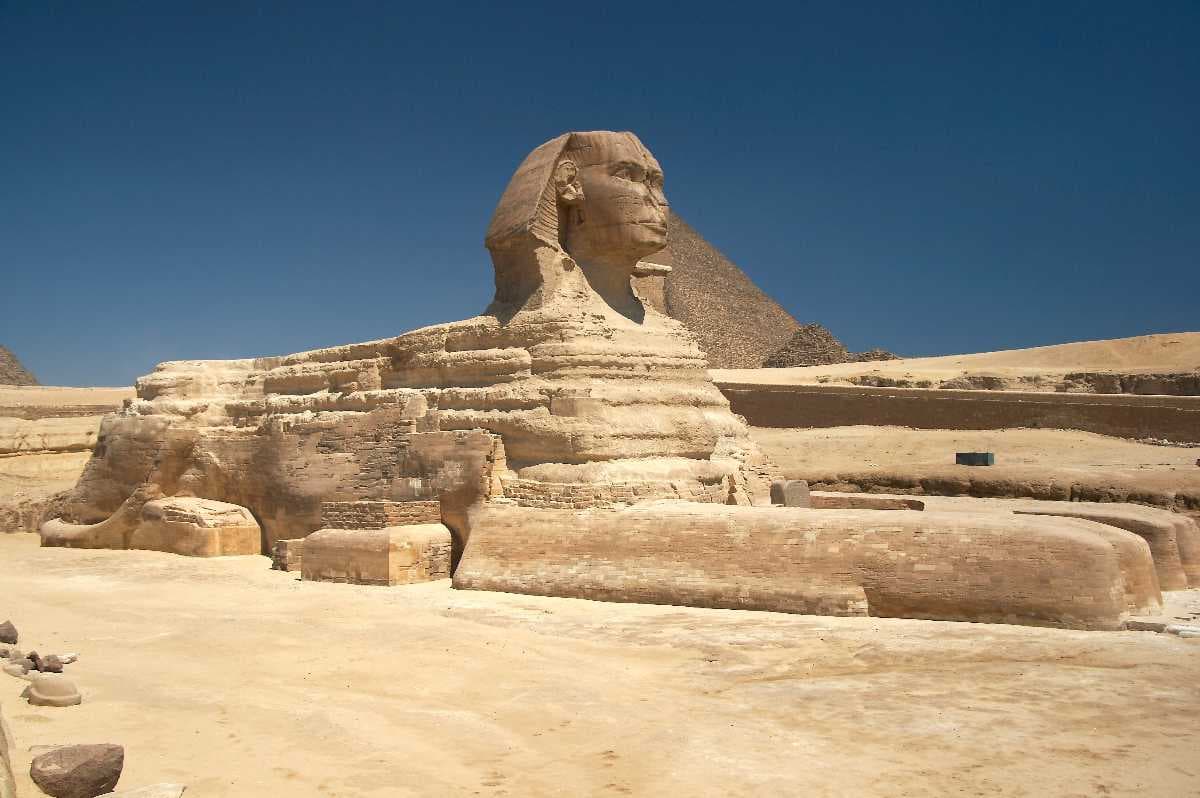
The Sphinx, an iconic monument of ancient Egypt, stands as a testament to the ingenuity and artistry of a bygone civilization. Located on the Giza Plateau near Cairo, this colossal statue, with the body of a lion and the head of a pharaoh, is one of the most recognizable and enigmatic structures in the world.
Awe-Inspiring Presence:
The sheer scale of the Sphinx is awe-inspiring. Measuring approximately 73 meters in length and 20 meters in height, it is the largest monolithic statue in the world, carved directly from the bedrock of the plateau. Its imposing presence, gazing out across the desert landscape, evokes a sense of wonder and mystery.
Historical Significance:
The Sphinx is believed to have been constructed during the reign of Pharaoh Khafre, around 2500 BC. While its exact purpose remains a subject of debate among scholars, it is widely believed to have served as a symbolic guardian of the nearby pyramids, where the pharaohs were entombed.
Cultural and Religious Symbolism:
The Sphinx holds profound cultural and religious significance. Its lion's body represents strength and authority, while the human head signifies intelligence and wisdom. Throughout history, the Sphinx has been a subject of fascination and inspiration, appearing in numerous works of art, literature, and mythology.
Visiting the Sphinx:
A visit to the Sphinx is an unforgettable experience. Standing before this ancient marvel, one can't help but be awestruck by its sheer size and the artistry of its creation. The Sphinx, along with the Great Pyramids of Giza, offers a glimpse into the grandeur and ingenuity of ancient Egyptian civilization.
Additional Tips:
- The best time to visit the Sphinx is during the cooler months of the year, from October to April.
- Be sure to wear comfortable shoes, as you will be walking on uneven ground.
- Bring sunscreen, a hat, and sunglasses, as the sun can be strong.
- Consider hiring a licensed guide to learn more about the history and mythology of the Sphinx.
The Sphinx, a timeless symbol of Egypt, continues to captivate and inspire visitors from around the world. Its enigmatic presence and enduring legacy serve as a reminder of the remarkable achievements of ancient Egyptian civilization.