
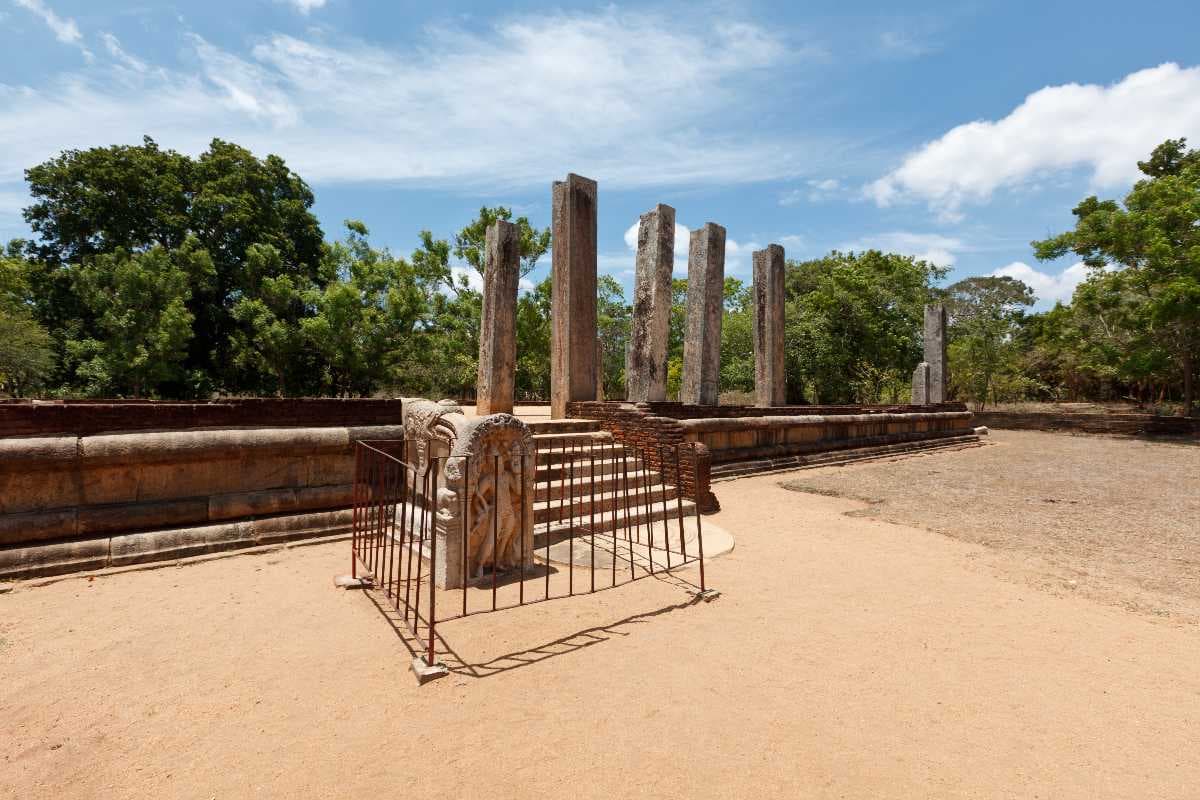
Nestled amongst the ancient ruins of Anuradhapura, Sri Lanka, lies the Ratnaprasada, a monument whose name translates to "Jewel Palace." Though time has reduced it to a captivating sprawl of remnants, the Ratnaprasada offers a glimpse into Sri Lanka's rich history and architectural prowess.
Originally built in the 2nd century AD by King Kanitta Tissa, the Ratnaprasada was a marvel of its time. Imagine a seven-story edifice reaching towards the sky, its elegant roof rising in tiers. The entrance would have been grand, marked by intricately carved guardstones (muragalas) depicting mythical creatures.
Today, the elements have taken their toll, leaving behind a collection of evocative ruins. As you explore, you'll encounter massive stone pillars, silent testaments to the building's once-grand scale. Look out for the beautifully preserved guardstones, considered some of the finest from Anuradhapura's era. Their intricate carvings might depict a cobra king, a mythical dragon, or even dwarf servant figures.
The Ratnaprasada held significance beyond its architectural beauty. It served as the Uposatha Ge, a building used by Buddhist monks for spiritual purification. The monastery here even offered sanctuary to those in trouble with the authorities, a fact that speaks to the complex's historical importance.
While its former grandeur may be a whisper in the wind, the Ratnaprasada's ruins hold a powerful allure. They spark the imagination, transporting you back to a time of architectural innovation and deep-rooted faith. So, if you find yourself wandering through the historical city of Anuradhapura, be sure to include the Ratnaprasada on your itinerary.