
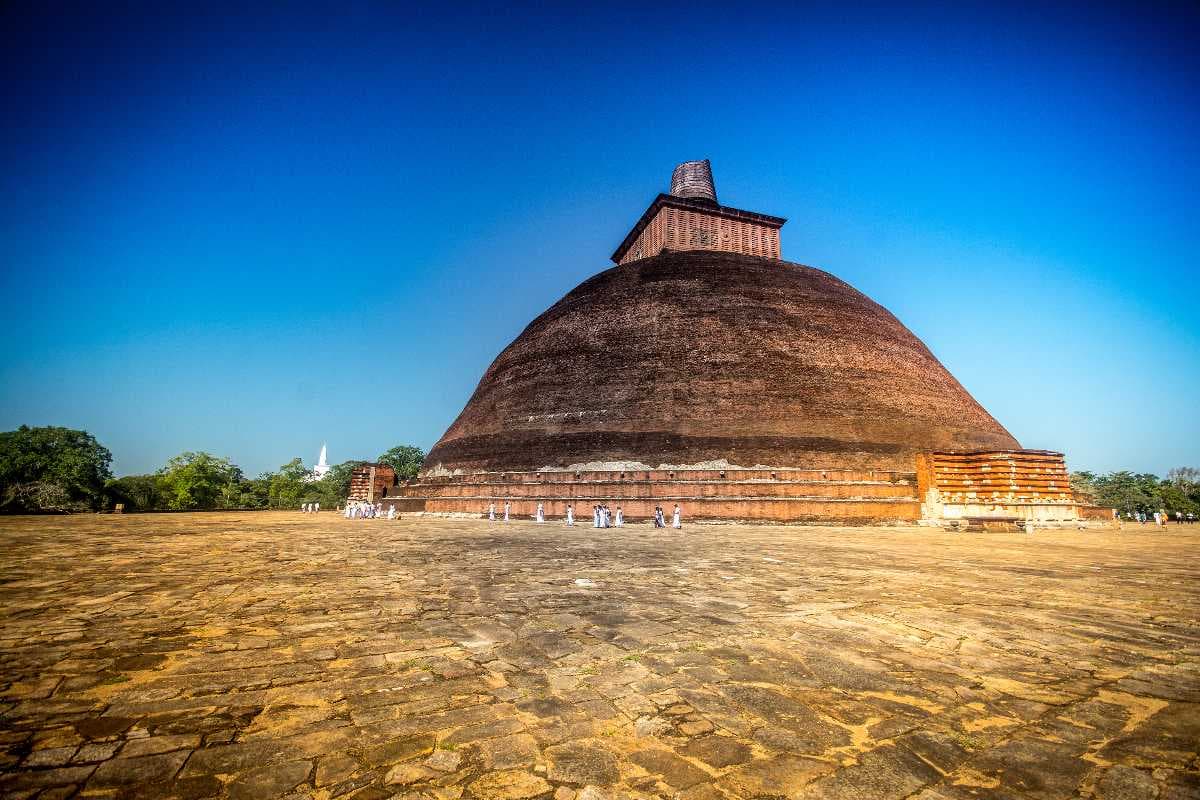
Stand in awe at the Jetavanaramaya Monastery, Anuradhapura, Sri Lanka, and be dwarfed by the sheer scale of one of the greatest engineering feats of the ancient world. Once the world's tallest stupa (dome-shaped structure) upon its construction in the 3rd century AD by King Mahasena, it remains a colossal landmark even in its partially-ruined state.
Though time and the elements reduced its height to a still-impressive 233 feet (71 meters), Jetavanaramaya's presence commands respect. The vast complex spreads over 5.6 hectares, hinting at the thousands of monks it once housed.
As you explore the monastery grounds, soak in the atmosphere. Walk amongst the ruins of buildings that bustled with monastic life centuries ago. Look for remnants of the elaborate gateways (vahalkadas) that demarcated the entrance, some adorned with carvings that offer glimpses into the artistic styles of the era.
Intrigue surrounds the Jetavanaramaya Monastery. Legends claim it housed a relic of Buddha's sash. The very name, translating to "Jeta's Monastery," sparks historical debate, hinting at a possible connection to a powerful Indian merchant who funded monasteries in ancient times.
Jetavanaramaya isn't just about grand scale and historical whispers. Take a moment to appreciate the engineering marvel. The stupa's construction used an estimated 93.3 million bricks, a testament to the dedication and skill of the ancient builders.
Remember to dress modestly when visiting, covering your shoulders and knees out of respect for the religious significance of the site. The scorching Sri Lankan sun might be present, so bring water to stay hydrated. Jetavanaramaya Monastery offers a glimpse into Sri Lanka's ancient power, artistry, and enduring Buddhist faith.