
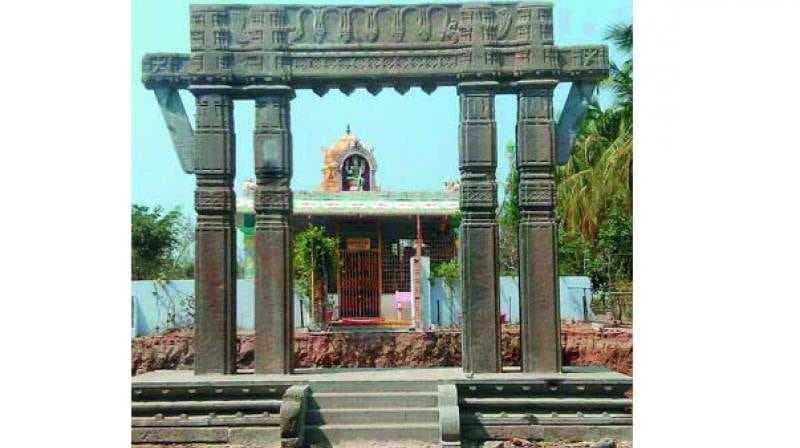
The Historic Inavolu Mallanna Temple: A Spiritual Journey to Warangal
The Inavolu Mallanna Temple, also known as the Mallikarjuna Swamy Temple, is an ancient shrine nestled in the village of Inavolu, about 17 kilometers from Warangal, Telangana. Dedicated to Lord Shiva in his manifestation as Mallikarjuna, the temple boasts a rich history dating back to the 11th century, when it was commissioned by a minister of the Kakatiya dynasty.
Architectural Splendor:
The temple complex itself is a testament to the architectural prowess of the Kakatiya era. As you approach, intricate carvings on the pillars and walls will hint at the artistry within. Step inside the 24-pillared mandapa, a pillared hall, and marvel at the intricate details. The main temple is surrounded by toranas, ornamental gateways, on the north, south, and east sides, adding to the grandeur.
A Unique Feature:
One of the most striking features of the temple is the chariot-shaped structure formed by 108 pillars. This unique design adds to the temple's mystique and is a testament to the creativity of the Kakatiya builders.
Festivals and Significance:
The temple holds immense spiritual significance for the locals. The annual Mallana Jatra festival, celebrated during Shivaratri in February, draws devotees from far and wide. Throughout the year, the temple is a place of peace and solace for pilgrims seeking blessings from Lord Shiva.
Planning Your Visit:
The temple is currently maintained by the Archaeological Department of India, and poojas (prayers) are still performed. If you're planning a visit, it's easy to reach from Warangal. Take the highway towards Khammam, look for the large arch entrance welcoming you to the Mallikarjuna temple, turn right, and drive for another 7 kilometers. Alternatively, buses ply this route, and autos are readily available at the arch entrance to take you directly to the temple.
A Timeless Legacy:
A visit to the Inavolu Mallanna Temple is a journey through time. It's a chance to witness the architectural brilliance of the Kakatiya era, experience the spiritual energy of the place, and be part of a living tradition that has endured for centuries.