
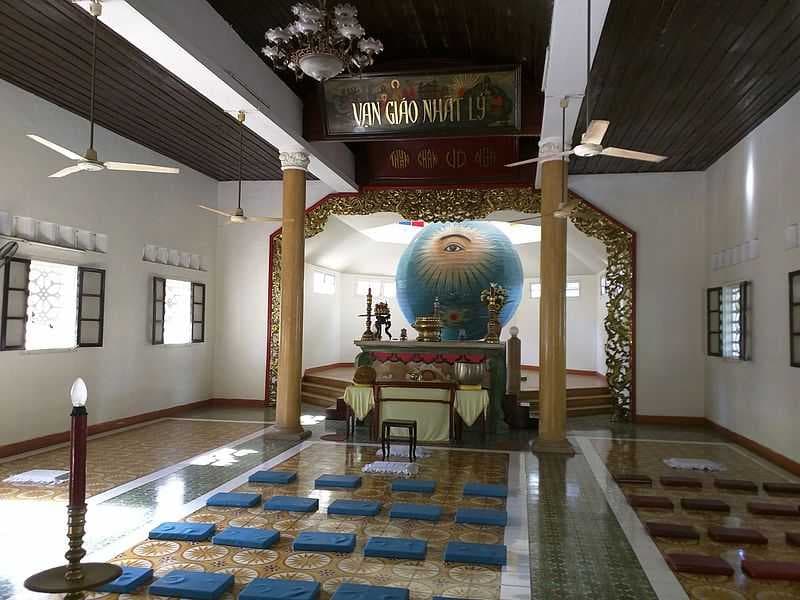
A Unique Faith: The Cao Dai Temple, Da Nang
Da Nang boasts a vibrant religious landscape, and the Cao Dai Temple is a must-visit for anyone interested in exploring uncommon belief systems. This architectural marvel is not only the second-largest Cao Dai temple in Vietnam but also a fascinating window into a religion that preaches unity and tolerance.
A Blend of Influences:
Cao Dai, founded in the early 20th century, combines elements of Confucianism, Buddhism, Taoism, Christianity, and Islam. This unique blend is reflected in the temple's architecture. The exterior features a fusion of styles – Neo-Gothic, Romanesque, and Oriental – creating a visually striking structure. Look for dragon-wrapped pillars, ornately decorated ceilings, and a giant eye symbol, the emblem of Cao Daism, adorning the facade.
Witnessing a Ceremony (Optional):
If your visit coincides with a ceremony (typically held at noon), it's a truly captivating experience. Be respectful and observe from the designated area. Here's what you might see:
- Colorful Robes: Worshippers wear long flowing robes – white for laypeople, and yellow, blue, or red for priests, with bishops sporting the Divine Eye on their headwear.
- Orderly Seating: Men sit on the right, while women occupy the left side, all seated in neat rows.
- A Serene Atmosphere: The chanting and prayers create a peaceful and calming ambience.
Exploring the Interior:
Shoes must be removed before entering. Inside, the ornateness continues. Look for the following:
- The Divine Eye: A prominent feature is a giant eye symbol representing God.
- Unity Message: A sign above the altar translates roughly to "all religions have the same reason," highlighting the core principle of Cao Daism.
- Religious Icons: Statues of Jesus, Buddha, Confucius, Lao Tzu, and Muhammad showcase the religion's inclusive nature.
Planning Your Visit:
Location: The temple is situated conveniently on Hai Phong Street, a central location in Da Nang.
Opening Hours: Generally open daily from sunrise to sunset, but it's recommended to check for any specific timings before your visit.
Dress Code: While there's no strict dress code, respectful attire that covers shoulders and knees is recommended.
Photography: Photography is usually permitted, but it's always polite to ask permission before taking pictures of worshippers during ceremonies.
A Journey Beyond Architecture:
The Cao Dai Temple is more than just a beautiful building; it's a testament to religious harmony and a unique cultural experience. Immerse yourself in the vibrant atmosphere, learn about Cao Daism's intriguing philosophy, and gain a deeper appreciation for Da Nang's diverse religious landscape.